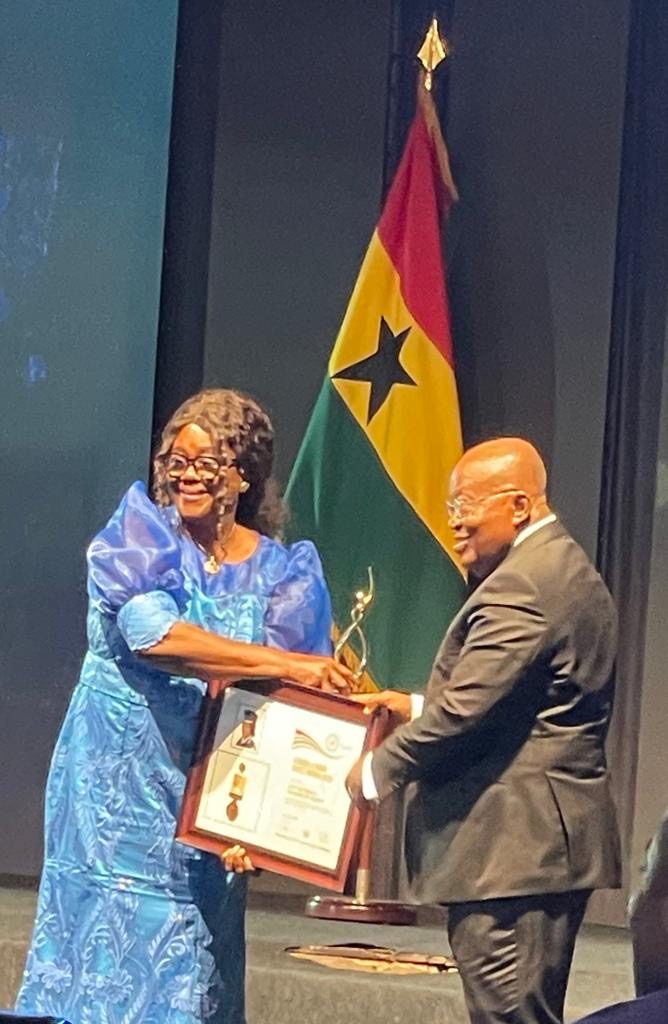
In 2007, I was named one of eight Human Trafficking Heroes of the Year and personally honoured by the United States Secretary of State and the U.S. Embassy. In 2010, during his first visit to Ghana as President, Barack Obama specifically acknowledged my work. I have also had the honour of a personal award from Condoleezza Rice, former U.S. Secretary of State, and the UN CRC Meritorious Award from Ghana's Ministry of Women and Children Affairs, among the recognitions I have received over the years. None of that was ever the reason I did this work. But I would be dishonest if I said recognition changed nothing about what came after it.
What Recognition Actually Does — and Does Not Do
Recognition does not rescue a single additional victim on its own. It does not fund a regional Anti-Human Trafficking Unit, and it does not put a rescued child back in school. What it does do, and this took me some years to fully appreciate, is open doors that were previously closed — a seat at a policy table that would not otherwise have made room, a government or embassy partner willing to take a meeting they might once have declined, a young officer who now believes this career path can lead somewhere, because she has seen proof that it can.
Carrying a National Reputation, Not Just a Personal One
Representing Ghana at international conferences, before embassies, and across bodies like the Commonwealth Parliamentary Association's project on Modern Slavery taught me that recognition earned individually still reflects on something much larger than any one career. Every award I have accepted, I have understood as much a statement about what Ghanaian law enforcement and Ghanaian women are capable of achieving on the world stage, as it is a statement about any particular operation I happened to lead.
What I Would Tell Someone Early in This Work
Do not chase recognition — it makes for a poor motivator on the difficult days, of which there are many in this profession, and it will not sustain you through them. Chase the outcome instead: the rescued child, the properly trained officer, the policy that actually gets implemented rather than merely signed. Recognition, when it comes, is worth taking seriously not for what it says about you, but for the access and credibility it can responsibly be converted into on behalf of the next case, the next piece of legislation, the next young woman deciding whether this career is actually open to her.
That, more than any single title or award I have received, is how I have tried to use whatever recognition has come my way — and it is the same principle I bring into every consultancy engagement today: credibility exists to be put to work, not admired.